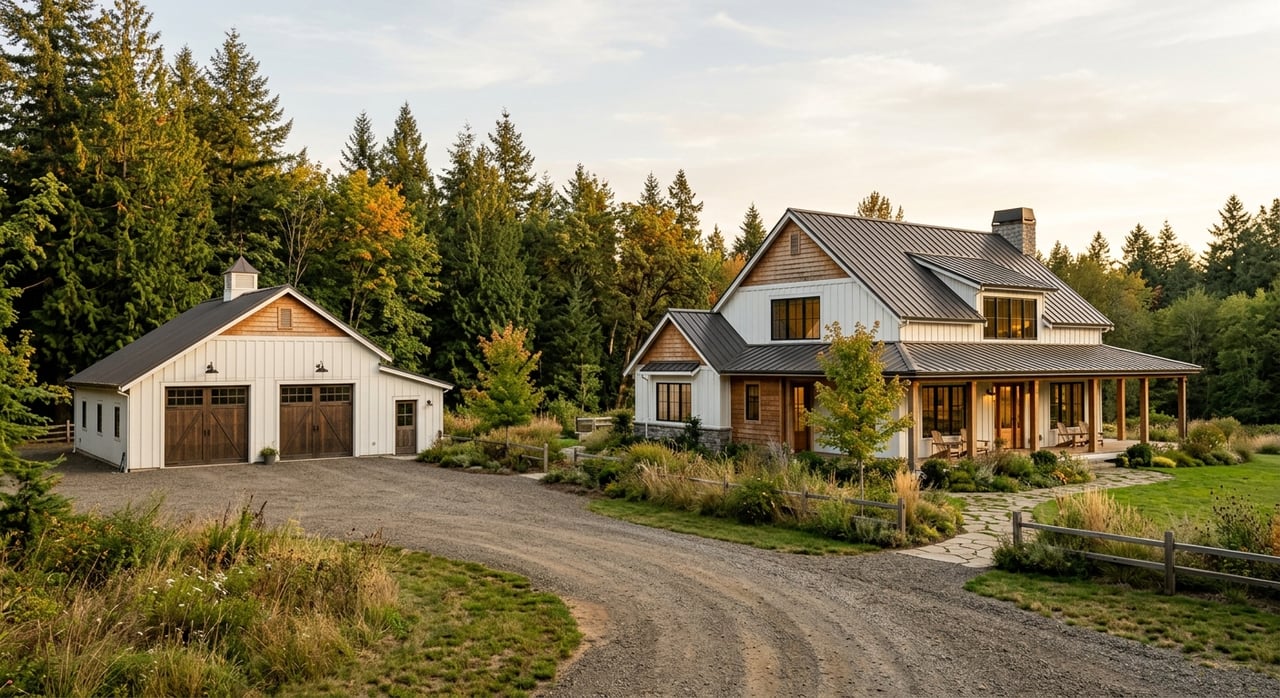
If you are dreaming about a shop, barn, or oversized outbuilding on Springfield acreage, it is easy to focus on the building first and the rules second. In reality, that order can create expensive surprises. A better plan is to understand jurisdiction, setbacks, utilities, and long-term land use before you finalize the footprint. Let’s dive in.
Start With Jurisdiction First
The first step is simple but critical: find out who governs the property. In the Springfield area, acreage may fall under the City of Springfield, Sarpy County, or an added SID or HOA layer. That matters because permit rules, zoning standards, and approval steps can change depending on the parcel.
The City of Springfield requires permits for detached garages and yard sheds. The city also tells applicants in SIDs to get developer approval and those in HOAs to review covenants. Sarpy County also directs property owners to determine jurisdiction first, especially for land outside city limits and outside municipal extraterritorial jurisdiction.
If you skip this step, you may design a shop that works on paper but not under the actual rules for the site. Before you buy acreage or commit to plans, confirm whether the land is in city or county jurisdiction and whether any private restrictions apply.
Know the Main Building Timing Rule
A common mistake on acreage is assuming you can build the outbuilding first and the house later. In many cases, that is not allowed. Both Springfield and Sarpy County generally tie accessory buildings to the principal use of the property.
Springfield generally does not allow an accessory building to be built more than six months before the principal building, except in the AR district. Sarpy County says accessory uses or structures are not to be established before the principal permitted use. If your plan is to add a shop before a home, that timing rule should be one of your first questions.
This can be especially important for owner-builders. If your long-term goal is a custom home with a shop, your construction timeline needs to match local rules from the start.
Understand Springfield Outbuilding Basics
Within the City of Springfield, detached outbuildings have clear placement standards. In general, accessory buildings are supposed to be located to the rear of the principal structure. They also cannot encroach on a corner lot’s street-side yard or a double-frontage lot’s front yard.
There are spacing rules too. Accessory buildings must stay at least 10 feet from other buildings. If vehicular access goes through the yard, the side or rear setback increases to 15 feet.
Springfield also applies local standards for materials and roof pitch on residential outbuildings. That means your shop or shed is not just about size. Design details can also matter during review.
Know the County Rules for Acreage Parcels
For parcels in Sarpy County, detached accessory buildings must follow the zoning district’s setbacks and height limits. They must stay out of front yards, required street-side setbacks, and easements. Those rules can significantly affect where your building pad actually fits.
In county districts outside AG and AGD, detached accessory buildings generally cannot exceed one and one-half times the footprint of the principal building. In some county residential districts, accessory structures are also capped at two total, with detached garages up to 720 square feet and garden sheds up to 144 square feet.
That is why acreage buyers should never assume that a large lot automatically allows a large outbuilding. The zoning district matters just as much as the acreage size.
Match the Building Plan to the Zoning District
Springfield-area acreage comes in several zoning formats, and each one can shape what you build. Sarpy County’s AG, AGD, and AGR districts are built around 20-acre, 10-acre, and 5-acre minimums. Springfield’s RT district is also acreage-oriented, with 2-acre or 5-acre minimums depending on the corridor overlay.
These district rules influence more than lot size. They can affect setbacks, permitted uses, outbuilding limits, and whether a future barn or agricultural use is realistic. If you hope a shed could later become a barn or support a different use, verify that possibility before you move forward.
For bona fide farmsteads in county AG, there is a narrow building-permit exemption for farm buildings on 20 acres or more that produce at least $1,000 of farm products per year. Even then, zoning compliance still applies.
Plan the Site, Not Just the Shop
A successful outbuilding plan is really a site plan. Sarpy County’s permit review looks at the arrangement of buildings, access drives, walks, parking, drainage, grading, and utility information. In other words, the county is reviewing how the full property functions, not just whether the building itself looks acceptable.
This is where many acreage buyers benefit from slowing down. The shop pad, driveway, parking area, and future expansion space should be thought through together. If you plan each piece separately, you can back yourself into setback, drainage, or access problems later.
County permits are valid for one year, and construction must begin within the first six months. Larger earthwork can also trigger a grading permit when more than 1 acre is disturbed. If work falls in a floodplain, a floodplain permit is needed as well.
Coordinate Driveways and Road Access Early
If your shop needs a new driveway, a widened access point, a culvert, or work in county road right-of-way, bring that into the planning stage early. Sarpy County Public Works handles road right-of-way permits through its Engineering & Permits office. County rules also say curb cuts must conform to county and state road regulations before permit issuance.
That can affect where you place the building and how equipment, trailers, or larger vehicles enter the property. A shop location that looks perfect on an aerial map may be less practical once access rules and turning needs are considered.
For corner lots or double-frontage parcels in Springfield, yard restrictions can narrow your options even more. That makes access design just as important as the structure itself.
Map Utilities Before Final Plans
Utility planning can make or break an acreage layout. Springfield’s new-resident guidance lists water and sewer through the City of Springfield, gas through Metropolitan Utilities District, and electric through OPPD. New water and sewer customers must complete a utility service application.
If you are planning a heated shop, welder, or other high-load equipment, confirm utility paths and service needs early. A layout that ignores existing or future utility runs can create avoidable conflicts with easements or force a costly redesign.
For properties that rely on private wastewater treatment, Nebraska regulates onsite systems such as septic tanks and holding tanks. Most systems are authorized by rule, but some require permits, and constructed or modified systems must be registered with the state. If the parcel uses a private well, the state recommends annual sampling for bacteria and nitrate and also administers groundwater well registration rules.
Fit the Well, Septic, and Shop Together
On acreage, open land can feel abundant until you start mapping real-world constraints. The well, septic area, driveway, utilities, and shop pad all compete for space. They also need to respect setbacks, access, grading, and any floodplain issues.
That is why it is smart to map these features together before purchase or final design. A parcel may seem ideal for a large outbuilding, but the usable area can shrink quickly once wastewater placement, well location, and access lanes are taken into account.
This is one of the biggest reasons acreage buyers benefit from a practical, step-by-step review process. The goal is not just to see what fits today, but what still works well five years from now.
Think About Future Expansion and Resale
Acreage planning is not only about your immediate needs. Around Springfield, some land is intended to remain rural, while other areas are expected to transition toward urban services over time. That future direction can affect where and how you build today.
One example is Sarpy County’s BTA overlay. This overlay exists for short-term acreage development in areas expected to receive urban services later. It requires a 60 percent set-aside for future urban development, and new construction is prohibited on that set-aside until community water and sewer are provided.
That means a property that looks perfect for a shop right now could have future subdivision, utility-extension, or easement implications. If long-term flexibility matters to you, ask whether any part of the tract falls in a growth-management or build-through area before you buy.
Use a Smart Pre-Offer Checklist
Before you make an offer on Springfield acreage, it helps to run through a short but thorough checklist. Doing that work upfront can protect your budget, your timeline, and your future plans for the property.
Here are the key items to confirm:
- Jurisdiction: City of Springfield, Sarpy County, or another layer
- Zoning district and related outbuilding rules
- HOA covenants or SID approval requirements
- Easements and usable building area
- Driveway and road access needs
- Utility service paths and connection options
- Septic and well status, if applicable
- Floodplain status
- Any future road, sewer, or utility project that could affect the site
If you are buying acreage with a shop or outbuilding plan in mind, this checklist can help you avoid buying land that does not support your goals.
Why Local Guidance Matters
Planning an outbuilding on Springfield acreage is part zoning exercise, part site-planning project, and part long-term investment decision. It is not just about whether you can fit a building on the lot. It is about whether the property supports your access, utility, timing, and future-use goals in a practical way.
That is where local, construction-savvy real estate guidance can make a real difference. When you understand the land first, you can move forward with more confidence and fewer surprises.
If you are considering Springfield acreage for a future shop, barn, or outbuilding, Missy Ruff can help you evaluate the property with your long-term plans in mind.
FAQs
What should you check first before planning an outbuilding on Springfield acreage?
- First, confirm whether the property falls under the City of Springfield, Sarpy County, or an SID or HOA layer, because approvals and rules can differ by jurisdiction.
Can you build a shop before a house on Springfield acreage?
- Usually, no. Springfield generally does not allow an accessory building more than six months before the principal building except in the AR district, and Sarpy County generally does not allow accessory structures before the principal permitted use.
Where can you place an accessory building in Springfield, Nebraska?
- In general, Springfield requires accessory buildings to be to the rear of the principal structure, out of certain yard areas, and at least 10 feet from other buildings, with a 15-foot side or rear setback if vehicular access goes through the yard.
What site issues matter when planning a shop on Sarpy County acreage?
- Key issues include setbacks, easements, driveway access, drainage, grading, parking, utilities, floodplain status, and whether more than 1 acre of disturbance may trigger a grading permit.
How do utilities affect Springfield acreage outbuilding plans?
- Utility routes can affect where a shop fits, especially if you need power for high-load equipment, water and sewer connections, or space for private well and septic systems.
Why should you think about future land use before buying Springfield acreage?
- Some acreage may be affected by long-term growth planning, such as Sarpy County’s BTA overlay, which can limit where new construction can go until urban services are provided.