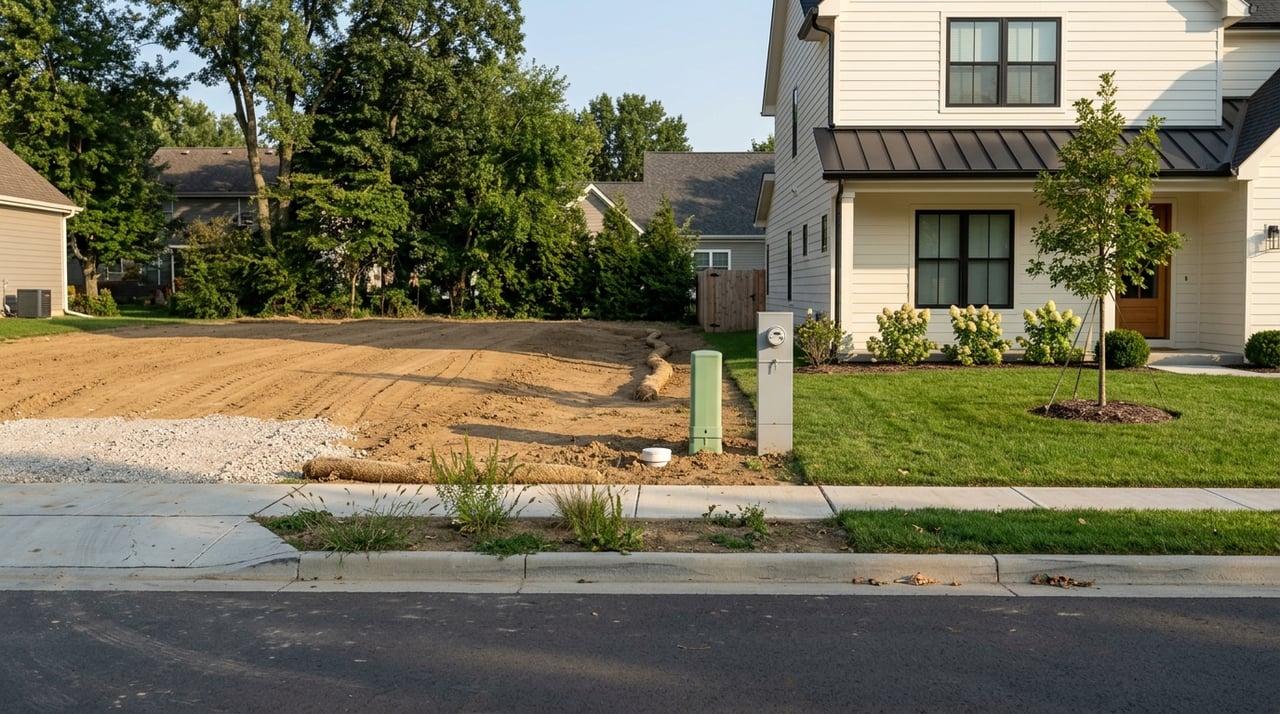
Buying a non-builder-attached lot in Gretna can feel exciting right up until the details start stacking up. A parcel may look perfect from the road, but zoning limits, drainage issues, utility questions, or future road plans can change what you can actually build and what it may cost. If you want to avoid surprises, a little upfront research goes a long way. Let’s dive in.
Start With Jurisdiction
One of the first things to confirm is who controls the lot. In Gretna, planning, subdivision recommendations, annexation, and zoning are guided through the city’s planning framework, including Plan Gretna and the Planning Commission.
That matters because not every parcel near Gretna is governed the same way. If a property sits outside current city limits and outside the city’s extraterritorial jurisdiction, Sarpy County says county zoning and building jurisdiction apply. Before you move forward, it is smart to confirm whether Gretna or Sarpy County will handle permits and approvals through the county’s online building permit resources.
Use GIS Before You Offer
A great first step is pulling the parcel in Sarpy County GIS. This public map system is one of the best tools for checking parcel lines, zoning, future land use, flood layers, and conveyance information.
For buyers looking at non-builder-attached lots in Gretna, this can quickly surface issues that are easy to miss in a listing photo. You can spot whether a lot has unusual dimensions, sits in a flood-related area, or may be affected by future planning layers before you spend time and money going too far.
Check Flood Risk And Drainage
Topography matters more than many buyers expect. Gretna’s floodplain regulations rely on official zoning maps, FEMA flood information, floodway maps, and digital FIRMs to determine floodway and flood-fringe boundaries, and permit applications must show grades and the nearest base flood elevation.
If a lot falls in the flood fringe, residential structures must be at least one foot above the highest base flood elevation available under Gretna’s zoning code. Floodway areas are even more restrictive. Even if a lot is technically buildable, low spots, drainage swales, and steep grades can add design complexity and cost.
Gretna’s zoning code also requires stormwater systems to follow city stormwater policies and best management practices approved by the city engineer. In simple terms, a lot with drainage challenges may require more planning for grading, driveway layout, foundation design, and stormwater handling than a flatter site.
Make Sure The Build Envelope Works
A lot can be large enough on paper and still not work well for your house plan. For standard R-1 single-family lots in Gretna, the zoning code requires 10,000 square feet and 80 feet of lot width.
Setbacks are also important. The code lists 25-foot front and rear yards, 7.5-foot side yards, and a street-side yard that varies depending on whether the lot is in existing or future development. In future development, the street-side setback can be 25 feet, and on some corner lots in new developments, the street-side setback must match the front-yard setback.
That can shrink your usable building space fast. Gretna also caps R-1 lots at 35 percent building area and 50 percent impervious area, so your home, driveway, garage configuration, patio, and other hard surfaces all need to fit within the rules.
Be Careful With Corner Lots
Corner, double-frontage, and triple-frontage lots deserve a closer look. Gretna’s code treats all street-adjacent sides as frontage, which can tighten setbacks and limit where accessory buildings may go.
This does not mean these lots are bad options. It simply means you should compare your preferred house plan and site layout carefully before you commit. A lot with extra visibility may also come with a smaller practical building envelope than a standard interior lot.
Review Easements, Covenants, And Restrictions
City rules are only part of the picture. Gretna’s floodplain ordinance specifically states that it does not repeal existing easements, covenants, or deed restrictions, even though the stricter city rule controls if there is a conflict.
That means a custom-build buyer should ask for the recorded plat, survey, covenants, easements, and any HOA rules early in the process. An easement along the rear or side of the property, or private restrictions on outbuildings, fencing, or exterior details, can affect your plans just as much as zoning.
Confirm Utilities Before You Buy
Utility access can have a major impact on cost and timing. Gretna Public Works maintains the city’s water and wastewater systems, and the city also serves some surrounding SIDs outside city limits through its water and sewer system information.
The zoning code also requires utility lines such as electrical, telephone, and cable service to be underground, and water, sanitary, and storm sewer systems must be coordinated with the city engineer. Electricity is in OPPD’s territory, and Black Hills Nebraska Gas lists Gretna in Rate Area One for natural gas service.
For you as a buyer, the key question is simple: Are the utility connection points close and clear, or will the site need extensions? A lot without an obvious water or sewer connection point can become much more expensive than it first appears.
Understand SID Costs
If the lot is in a sanitary and improvement district, make sure you ask about special assessments. Sarpy County notes that special assessments are commonly used by SIDs, cities, or the county to pay for improvements such as streets, sewer, water, and electrical infrastructure.
These costs can be a meaningful part of ownership. A lot price may look attractive at first glance, but remaining SID-related assessments or infrastructure debt can change your monthly budget and long-term cost picture.
You can learn more through Sarpy County’s special assessments information. This is one of the most important financial checks for a non-builder-attached lot.
Watch Future Growth Plans
Gretna is growing, and future planning can affect a parcel in ways that are not obvious during a showing. The city’s planning documents note that municipal planning and zoning frameworks include updates to Plan Gretna, the Crossings Corridor Master Plan, and WE-STEP, which is a western Sarpy County transportation plan.
For buyers, this means edge-of-town lots and parcels near major corridors should be reviewed for possible road widening, trail links, collector street connections, or right-of-way needs. It is also wise to check Gretna’s annexations page if the lot sits near the city edge, since future jurisdiction changes can affect development rules over time.
Know When A Variance Is A Warning Sign
Sometimes a lot only works if you obtain a variance. That does not always mean the deal is dead, but it should prompt extra caution.
Gretna’s Board of Adjustments uses standards that require hardship and no substantial detriment to adjacent property. If your build depends on a variance for setbacks or another core issue, it is worth asking about timing and standards through the city’s Board of Adjustments page before moving ahead.
A Practical Lot-Selection Checklist
If you want a simpler way to evaluate a non-builder-attached lot in Gretna, focus on these steps:
- Pull the parcel in Sarpy County GIS and confirm zoning, flood layers, future land use, and conveyances.
- Verify whether Gretna or Sarpy County has permit jurisdiction.
- Compare your house plan to the lot’s width, depth, setbacks, and coverage limits.
- Ask for the recorded plat, survey, covenants, easements, HOA rules, and SID assessment status.
- Confirm water, sewer, electric, gas, and any service-extension needs.
- Review annexation activity and long-range corridor or transportation plans.
- Ask more questions if the lot appears to need a variance.
Common Red Flags To Catch Early
Some lot issues are manageable, and some are signs to slow down. Common red flags in Gretna include:
- Flood-fringe or floodway designations
- Low areas, drainage swales, or steep grades
- Corner, double-frontage, or triple-frontage layouts that reduce the building envelope
- Unclear water or sewer connection points
- Lots in SIDs with lingering special assessments
- Easements, covenants, or deed restrictions that conflict with your intended build
- Parcels near planned corridor improvements or annexation activity
In many cases, the best non-builder-attached lots are the simplest ones. Clean grades, no flood overlay, enough width for your home plan, nearby utilities, manageable SID costs, and no obvious right-of-way conflicts usually make for a smoother path.
Choose With Confidence
The right lot is not just the one that looks good today. It is the one that supports your home design, fits your budget, and gives you fewer surprises during the build process.
If you are comparing lots in Gretna and want a practical second opinion on zoning, buildability, and the questions to ask before you write an offer, Missy Ruff can help you sort through the details and move forward with confidence.
FAQs
What should you check first on a non-builder-attached lot in Gretna?
- Start by confirming jurisdiction, zoning, parcel dimensions, flood layers, and future land use through Sarpy County GIS and the applicable city or county permit authority.
Why do corner lots in Gretna need extra review?
- Corner, double-frontage, and triple-frontage lots can have tighter setback rules because street-adjacent sides are treated as frontage, which may reduce usable build space.
How do flood rules affect lot selection in Gretna?
- Flood-fringe and floodway designations can limit what you build and may require elevation, added design work, or stricter development standards.
What are SID assessments on Gretna-area lots?
- SID assessments are charges often used to pay for infrastructure like streets, sewer, water, and electrical improvements, and they can add meaningful ownership costs.
Why should you review future growth plans before buying a lot in Gretna?
- Road widening, trail connections, annexation activity, and corridor improvements can affect setbacks, access, and the long-term use of a parcel.